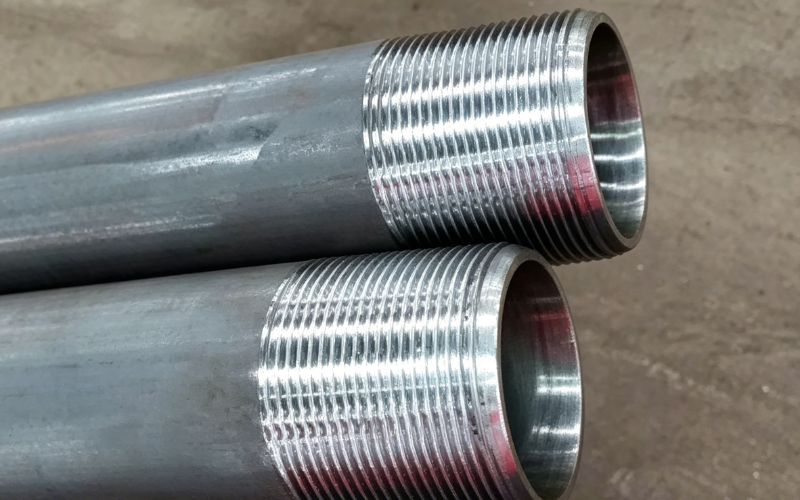
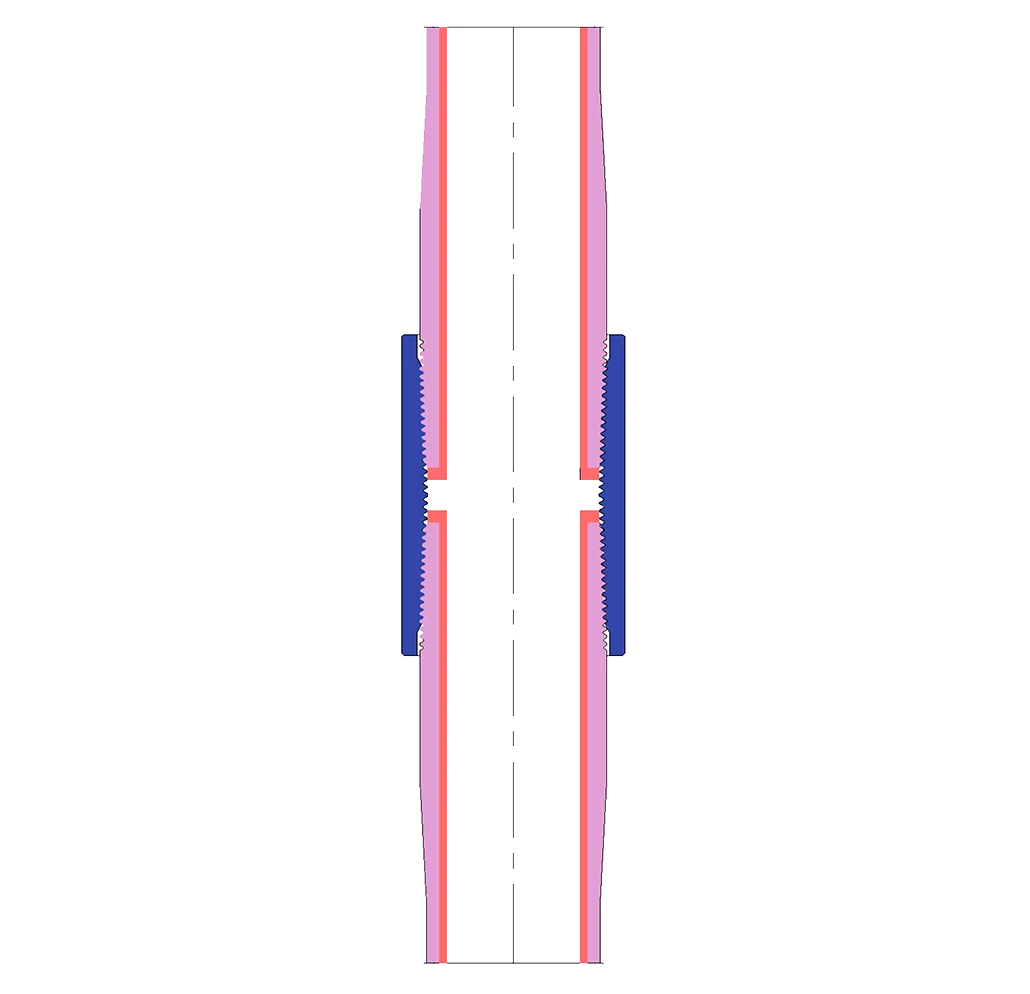
A composite pipe featuring a corrosion-resistant alloy layer embedded within the inner wall of a steel pipe. This combination leverages the high strength of steel pipes and the exceptional corrosion resistance of the alloy layer, achieved through a specialized process that enables a molecular-level bond between the two metals.
Product specifications: 2-7/8” to 3-1/2”
Steel grade: N80, L80
This dual-layer structure makes full use of the advantages of the base pipe and the corrosion-resistant alloy layer. It exhibits significant advantages in terms of lifespan, heat resistance, resistance to detachment, and corrosion protection of threads. It is suitable for high-corrosion, high-temperature, deep-well, and other challenging well conditions, outperforming PNE-coated tubing in terms of performance and reliability.
Carbon steel/low alloy steel, featuring high strength, high pressure resistance, and resistance to external compression.
Stainless steel, duplex steel, nickel-based alloys, and other materials feature inner layers with corrosion resistance, wear resistance, and high-temperature performance.
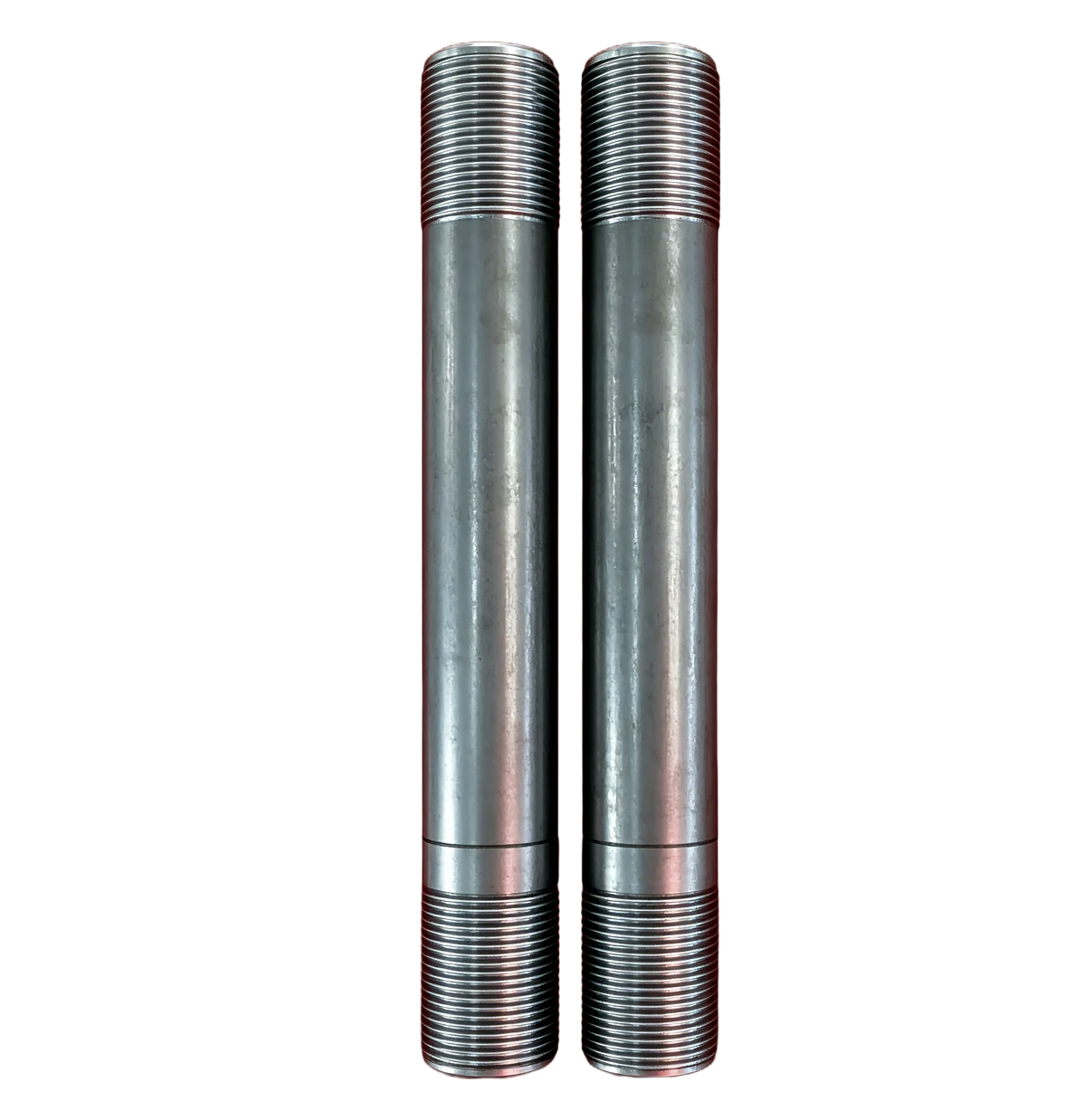

The inner tube’s corrosion-resistant alloy layer effectively resists the corrosion caused by H₂S, CO₂, and Cl⁻, significantly extending its lifespan.

The base tube has high strength, ensuring excellent mechanical properties and resistance to crushing damage for the tube body.

The composite interface is firmly bonded, making it suitable for extremely harsh operating conditions.
With long-term expertise in the manufacturing of OCTG, we possess advanced equipment and large-scale production capabilities, enabling us to consistently deliver high-quality products.
With long-term expertise in the manufacturing of OCTG, we possess a reliable quality control system, ensuring stable and dependable product quality.
Our team of professional technical service experts is available 24/7 to provide on-site technical support for pipe installation work, helping to ensure the long-term efficient operation of equipment.